
History
A site that has always made power
Power for the clay industry
The Old Engine House stands on ground that has generated electricity for well over a century of Cornish industry. The site began life as a coal-fired power station built to serve the china clay works around Drinnick Mill — an industry whose dries, pumps and rail sidings needed far more power than the local network could then supply. Coal came in by rail, and the clay went out the same way.
The 1974 rebuild
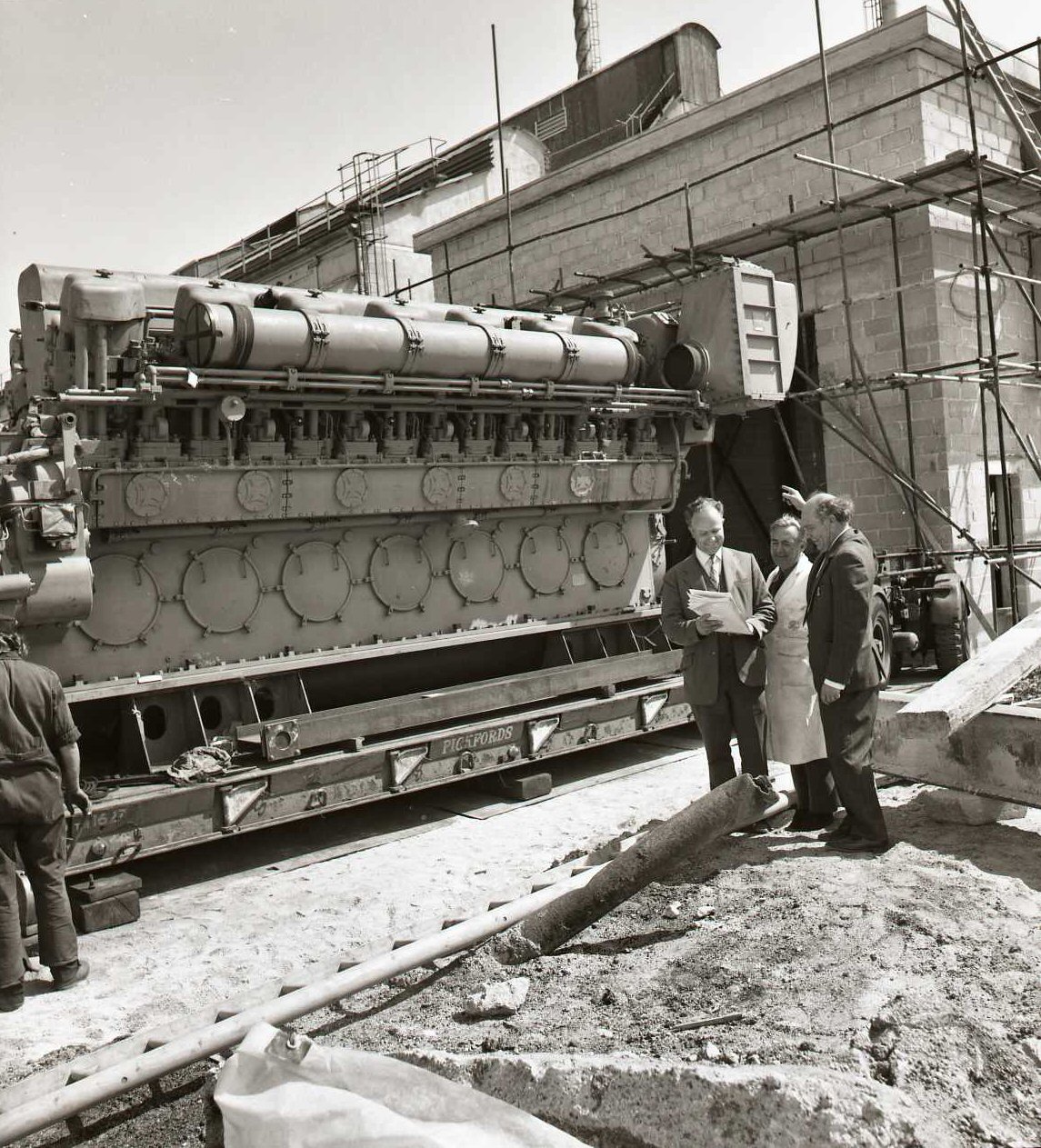
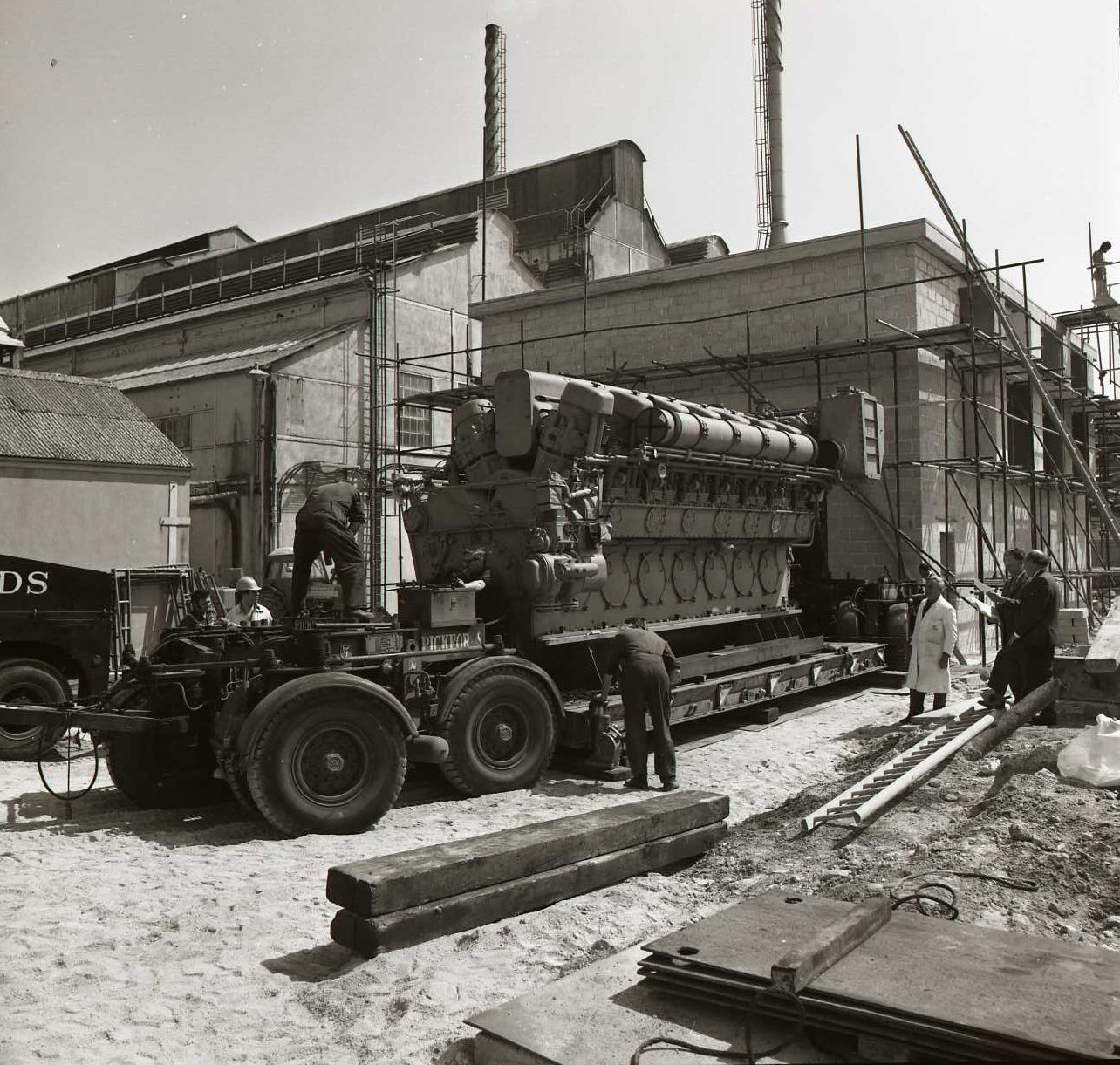
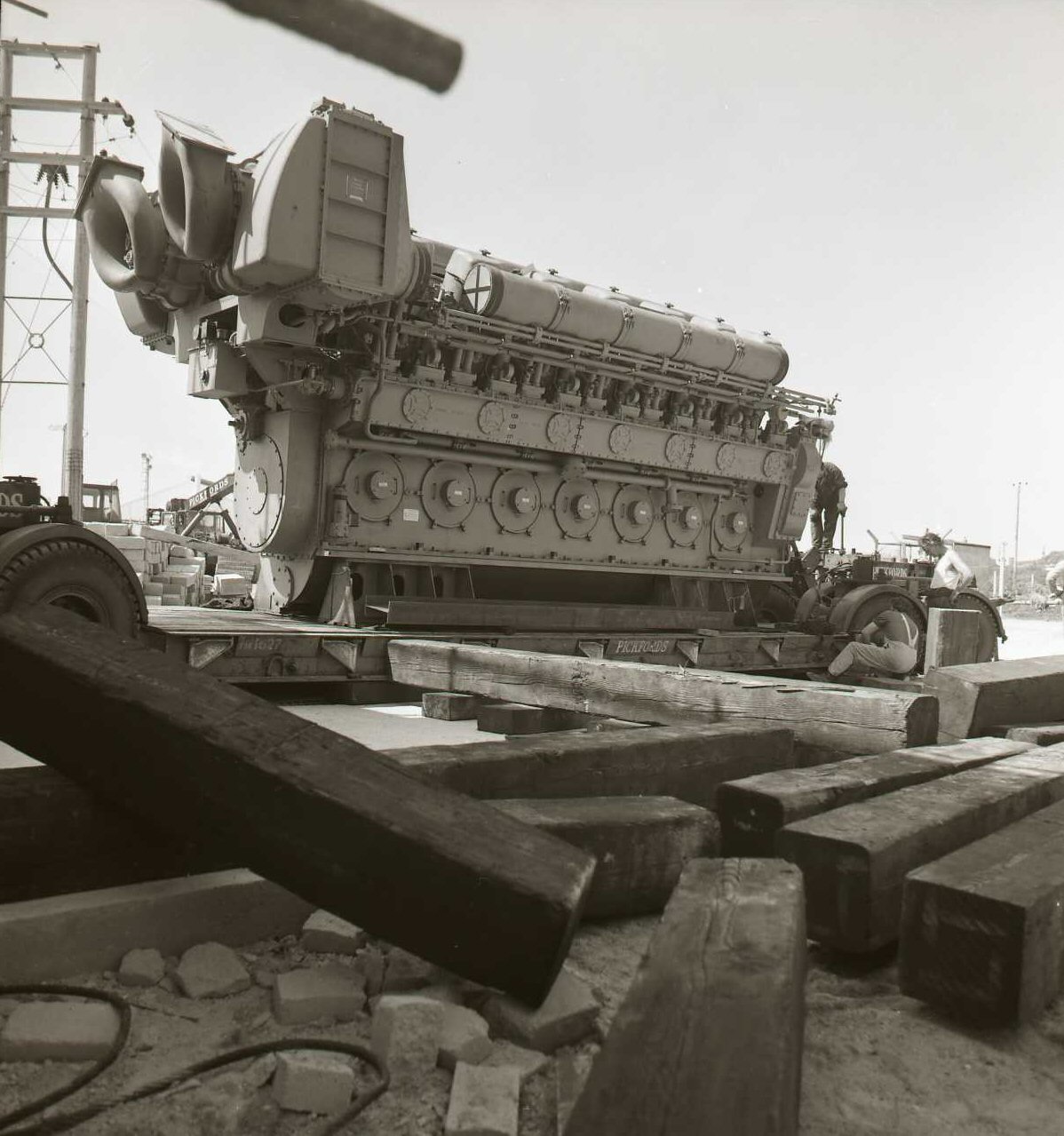
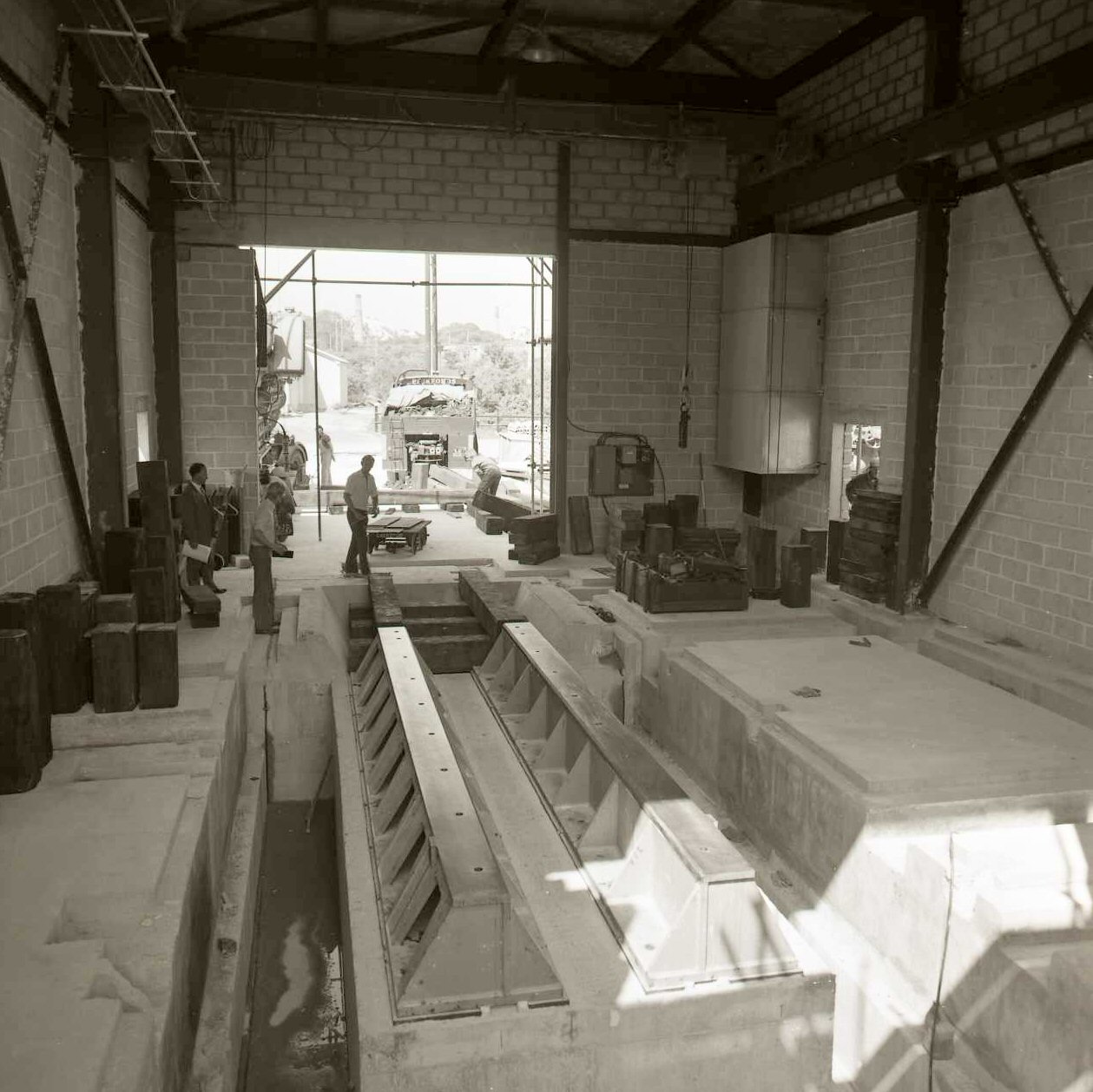
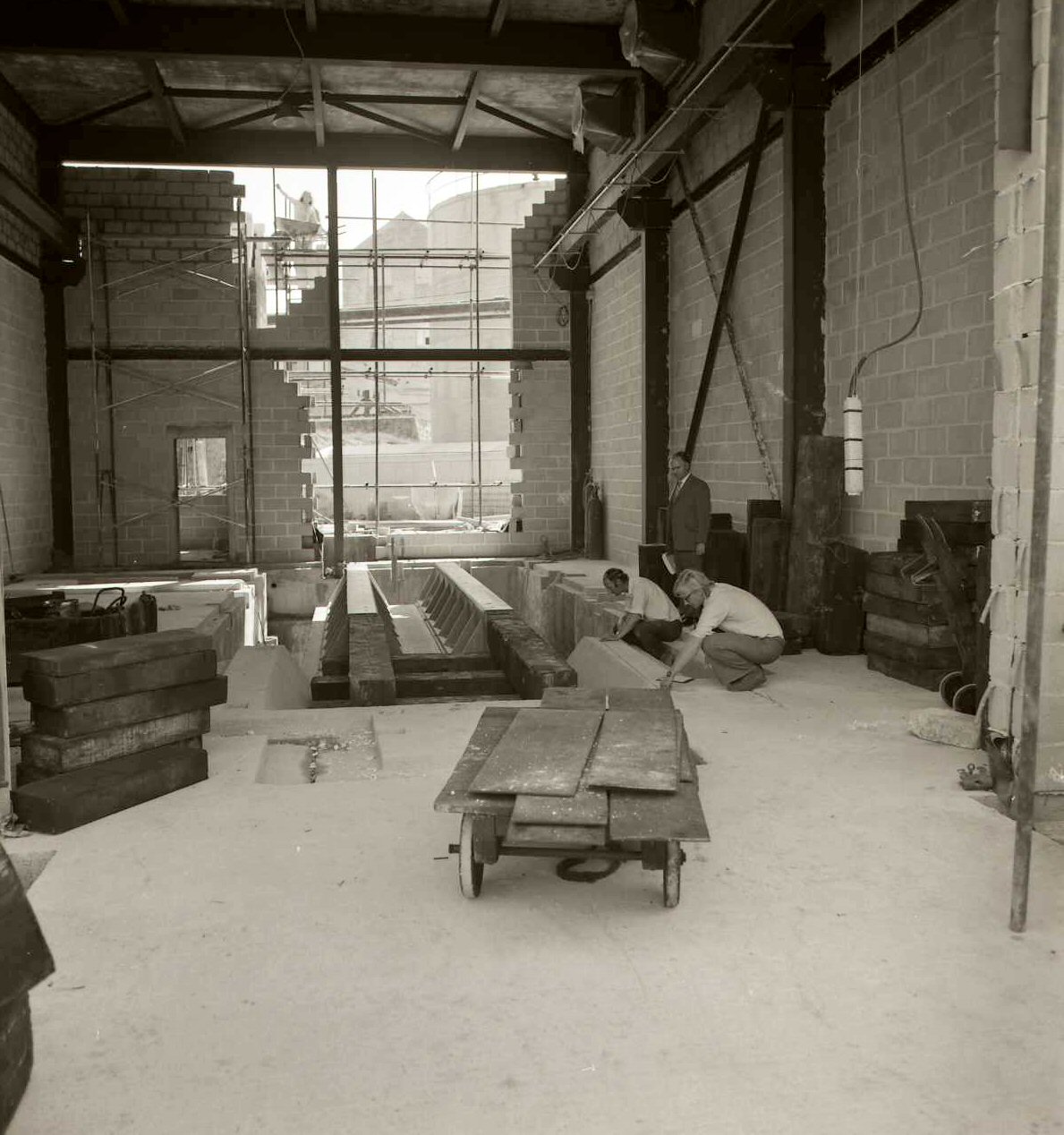
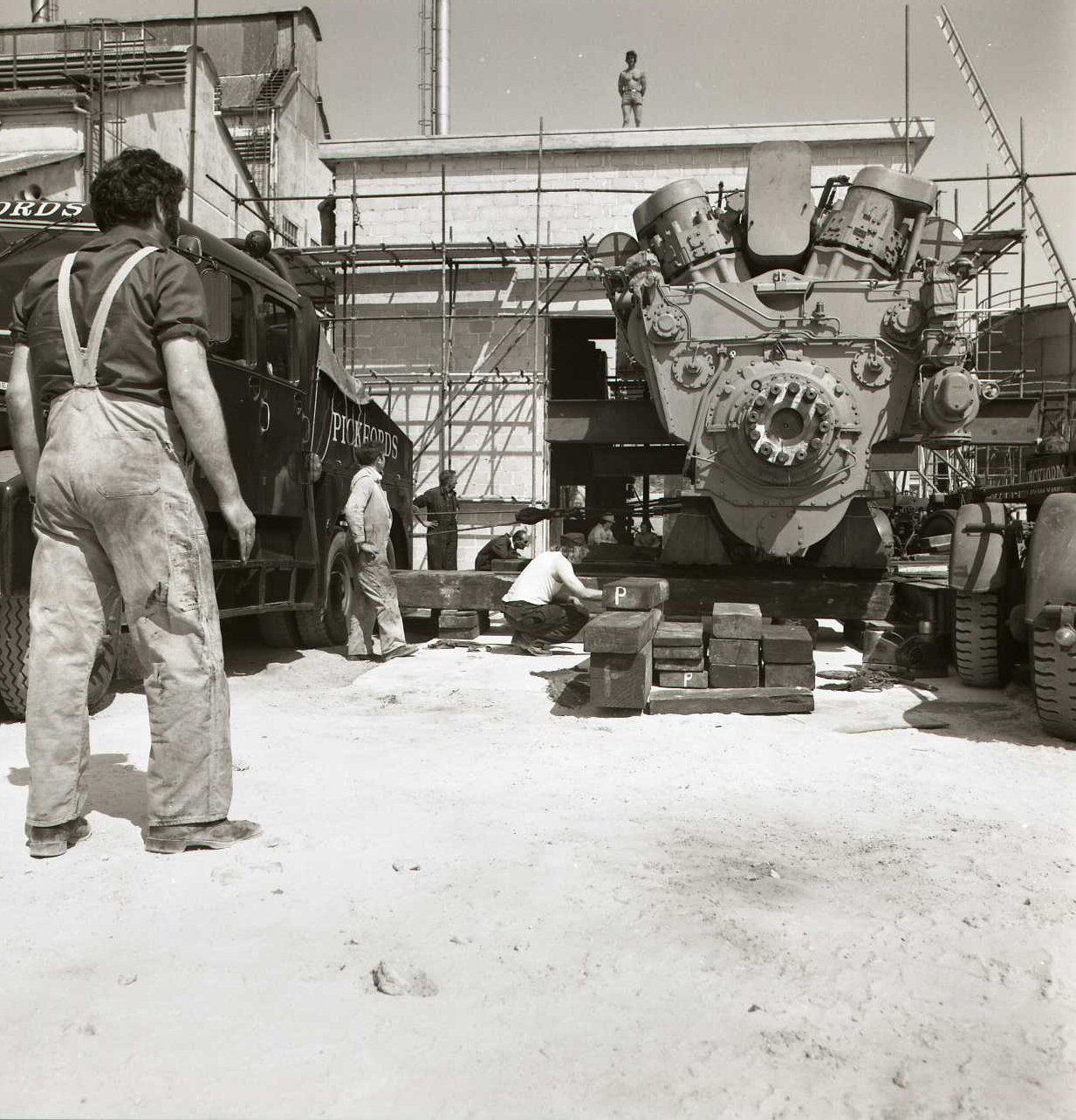
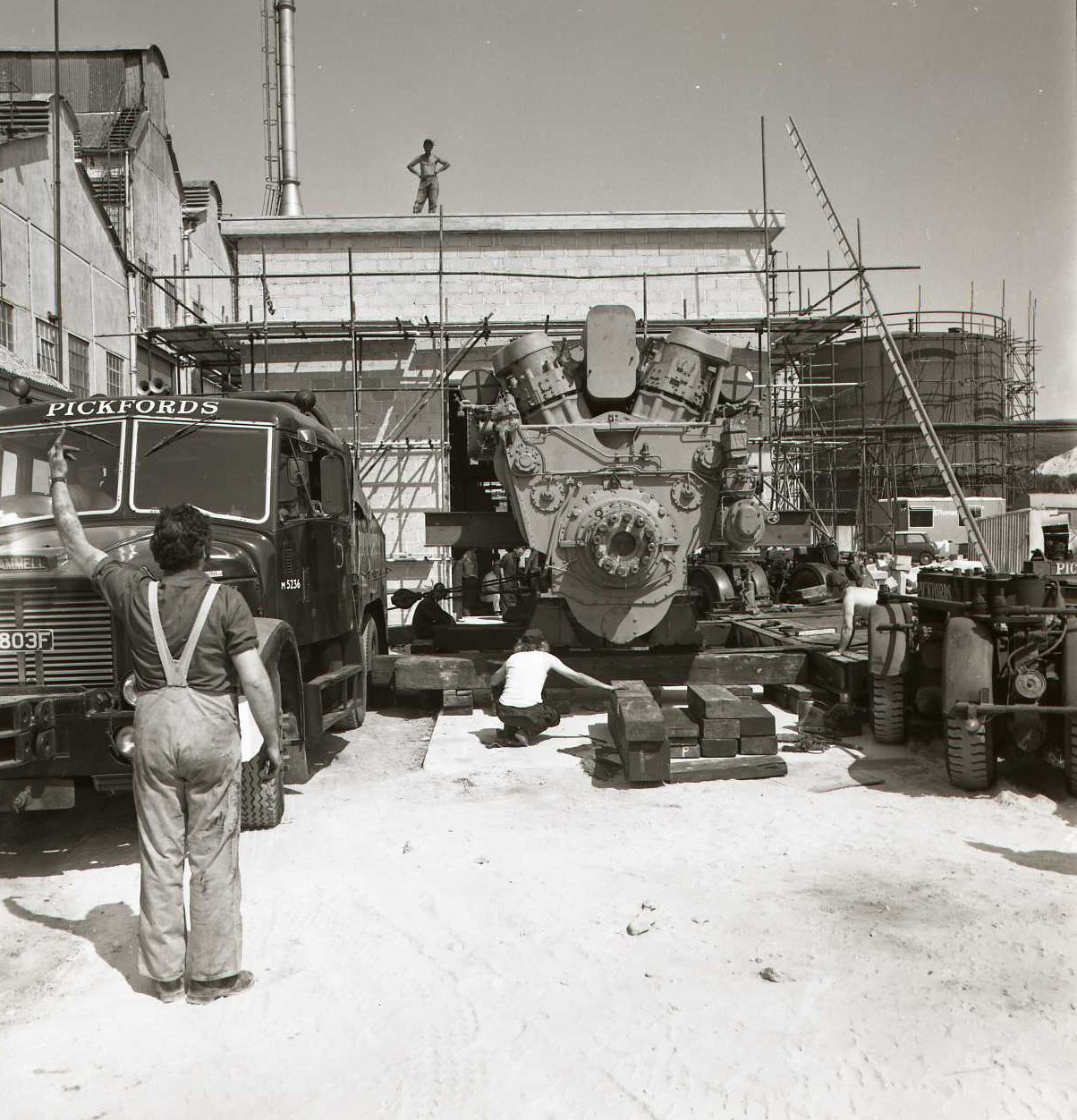
As the coal plant reached the end of its working life it was demolished and replaced with diesel generation. The photographs below record that moment: in June 1974 a 5 MW generator set was brought onto the site by Pickfords low-loader, edged past the scaffolded shell of the new engine hall and lowered onto foundations that had already been cast and levelled. Engineers in white coats and suits stand beside an engine longer than the lorry that carried it — an unusually well-documented piece of Cornish industrial history.
From power station to development site
The plant eventually became surplus as the clay industry consolidated and grid supply improved, and the buildings and surrounding land passed out of generating use. Goonamarris Ltd acquired the property to bring it back into productive commercial life, retaining the character and the name of the engine house while opening the wider site up for new buildings.
Power again, differently
The scheme now under construction returns the site to what it always did best. In place of coal and diesel, every roof across the 25 new units carries solar photovoltaic panels, with electricity supplied to occupiers at 25p per unit and filtered spring water drawn from the site itself. Fifty years after that generator was craned into the engine hall, the same ground is generating power for Cornish businesses again.
Archive · June 1974
Installing the generator
Further photographs of Drinnick Mill and its power station can be found in the Cornwall Railway Society collection.